

Look again
This changes everything

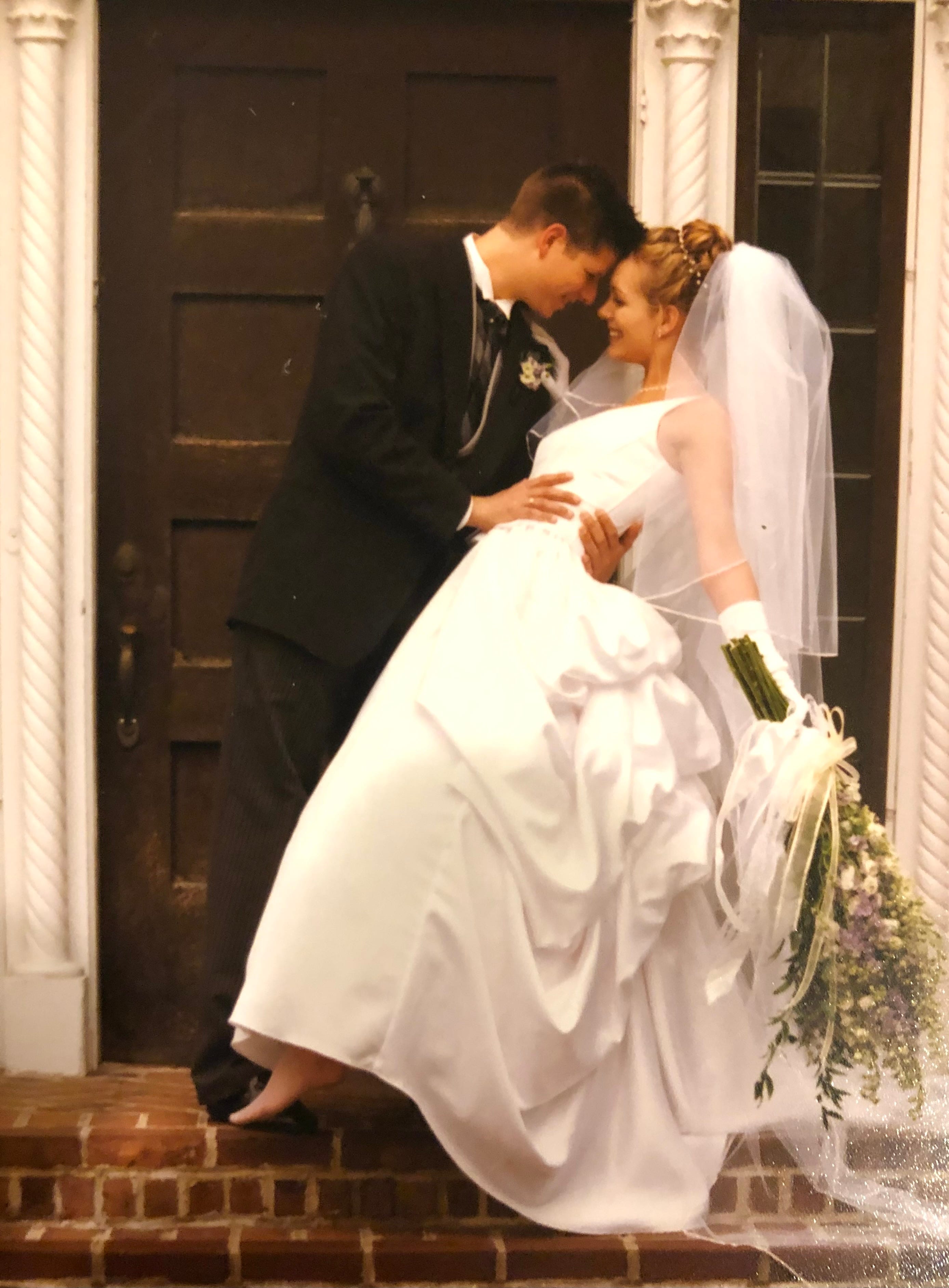
My husband and I honeymooned in Hawaii. Waikiki to be exact. We were babies when we got married (21 and 22), and at the time we were too young to rent a car. Because there was no such thing as Uber, we were stuck flying into Honolulu and taking public transit to Waikiki where we stayed in a high-rise just off the beach. The entire trip was our wedding present from my new in-laws. They thought of everything from champagne and chocolates in our room when we arrived to a daily stipend for food and entertainment so we could just enjoy the time together. We walked everywhere and pinched every penny.
Aaron and I were dirt poor when we got married. Like, recent college grads who hadn’t started their new jobs and had zero savings poor (we literally graduated the day before the wedding). Our honeymoon was an extravagance that took our breaths away.
Our first full day in Waikiki, we had breakfast at Denny’s (fresh squeezed orange juice!) and then walked to the beach. The sand and surf was in sight when we encountered a homeless man. He was naked except for a pair of filthy cargo shorts that were hanging off his hips, and his long, dark hair was so matted it had begun to form haphazard dreadlocks. His beard was dirty and we could smell him from ten feet away. He was clearly high or suffering from severe mental illness.
Growing up in small town Iowa, I had encountered vanishingly few people experiencing homelessness. But Aaron was raised in the city and knew just what to do: he put himself between me and the stranger and we walked right past. The man didn’t say a word, but he did extend his hand. We ignored it.
On the beach, we wondered if we had done the right thing. We had some cash in our backpack, and it certainly wouldn’t have inconvenienced us much to give him a five or ten. But, we reasoned, we were so poor ourselves! We had a daily allotment that we couldn’t exceed, and we both hoped to scrounge enough for some new clothes off the discount rack for our jobs in the “real world.” Not to mention, we worried that he’d just use the money on drugs anyway. We didn’t want to contribute to his addiction. We settled onto our beach towels feeling certain we were justified in our inaction.


But we saw him the next day. And the next. For three days it felt like we bumped into the man every time we turned around. He was always wearing the same thing (practically nothing) and he was always mumbling to himself. Because we encountered him so often, we began to notice more details: his bones protruded, his feet were bare, he was scarred. By the time we retreated to our hotel at the end of the third day, we were both sick to our stomachs. “We need to do something for him,” Aaron said, and I quickly agreed. We gathered up more money than we could spare (I don’t remember the exact amount, but it wasn’t trifling), and decided that when we saw him the next day, we’d not only give him the money but try to have a conversation with him and see if there was something more substantial we could do to help.
The following morning we woke up to the sound of music and laughter outside our window. We were a few stories up, but when we threw open the curtains and stepped out onto the balcony, there was a parade marching down the center of the street. They were blaring Christian music and held signs emblazoned with Jesus loves you! “It’s a Jesus parade!” I marveled.
We laughed and waved as they danced past, but were surprised by what we saw at the very end of the line: shuffling behind the procession in his crooked, halting way was the homeless man. I think it struck Aaron and I at the exact same moment: he looked like Jesus. Dark skin, long hair, beard. Cleaned up, he could have donned a robe and posed for a portrait of Jesus at Gethsemane or Jesus Feeds the 5,000. We were stunned that we hadn’t seen it before.
We threw on clothes and rushed downstairs, hoping to catch him before he got too far. We caught up with the parade in no time, but we didn’t see him. In fact, we never saw him again. Although we wandered the streets and even asked people about him, he was gone.
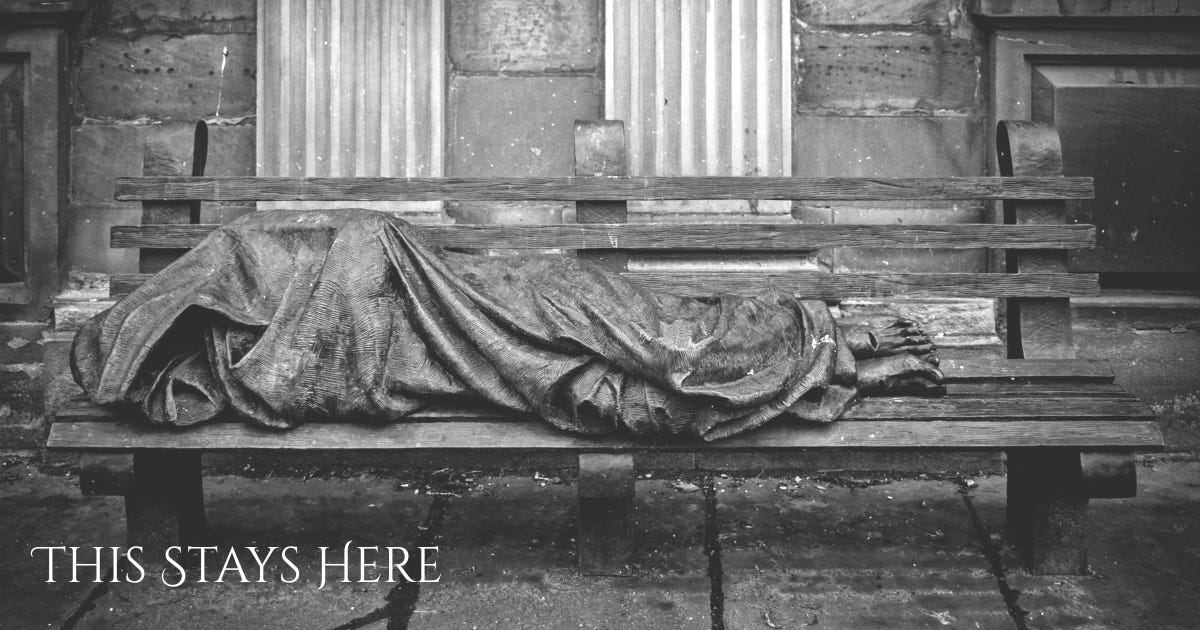
I’ve never told anyone that story before. Mostly because I’m ashamed. But also because it felt like a lesson that was meant for me and Aaron. I believed for years that God was saying: Open your eyes!
Now, I feel like he was trying to tell us to open our hearts.
There’s a movement today spearheaded by Christian podcaster Allie Beth Stuckey that warns people away from “toxic empathy.” She argues that “empathy has become a tool of manipulation by left-wing activists who bully people into believing that they must adopt progressive positions to be loving.” I suppose that’s her thesis statement, but I believe it has translated into a spirit of miserly love: kindness that exists only as a careful calculation of worth divided by our “in my own image” definitions of goodness and justice. In other words, if I can’t understand it, if a situation is complicated or messy or “gives me the ick” (abortion, gender and sexuality, immigration, etc.), trying to be empathetic to someone’s plight isn’t just misguided, it’s wrong. I have no doubt believers in the concept of toxic empathy would laugh at my deep regret in ignoring a man who needed help all those years ago. As “welfare queens” don't deserve SNAP benefits and gay people don’t deserve to be married, so homeless drug addicts shouldn’t be given money to indulge their sins.
I’m not trying to be flippant—these are deeply held beliefs in many Christian circles, Stuckey just named it. This mindset is crystal clear when a woman is assaulted but people ask: “What was she wearing?” Or when families are torn apart by ICE and someone comments: “Well, they should have come here legally.” It’s cruelty masquerading as Christian tough love. It’s “hate the sin, love the sinner”—which anyone who has been on the receiving end of such “love” knows is actually unequivocal condemnation.
This isn’t a rebuttal of Stuckey’s book (there are countless reviews already online), but merely a way to help me organize my thoughts as I remember that experience nearly twenty-seven years ago and relate it to what we are witnessing today. “Look away!” Aaron and I told ourselves in Waikiki. And today, that seems to be a common refrain as we are encouraged to just let ICE agents do their jobs, forget the Epstein files, and focus our ire on hungry families who want handouts instead of billionaires who get tax breaks. But empathy isn’t weakness—and it certainly isn’t evil—and I believe remembering how we are connected is perhaps our best hope of surviving this madness.
Some thoughts on empathy
Empathy is not unthinking, it is deep thinking. It requires you to examine, analyze, and perhaps rethink things you thought you knew. It requires both emotional complexity and mental acuity as well as a Christ-like humility to understand (and admit!) that you don’t know something. That perhaps you were wrong all along. That realization was painful for Aaron and me on what was supposed to be our happy, carefree honeymoon—but it is a lesson that has stayed with us and shaped our family to this day.
Empathy engages your whole humanity—heart, soul, mind, and strength. We memorize rules and know right from wrong, and yet face nuanced, complicated situations on a daily basis that shatter our expectations. Empathy is what allowed my Dutch grandmother-in-law to open her home to a family of Jews during World War II even though it was illegal to do so. Her mind (and the laws of her country) may have said no, but her heart and soul said yes. She saw a family not unlike her own and did everything in her power to keep them safe from harm.
Empathy allows us to move beyond rigid, binary thinking where everything is a zero sum game and expands our understanding. It encourages us to use our creativity to change oppressive systems and recognize the real harm that may lead to outcomes no one predicted. We’re watching this happen in real time as the toxic purity culture of my teen years is dismantled and young women are taught that their worth is not something that can be tarnished or taken away.
Empathy doesn’t excuse wrongdoing, instead it has the integrity to ask hard questions and examine every angle. How did we (or societal systems, cultural norms, or institutional structures) contribute to what happened here? How can we do better? And how can we (while requiring accountability) begin to dismantle problematic systems? We often judge based off of culturally conditioned, artificial, and totally biased hierarchies of sin, but Jesus chased away the accusers of the woman caught in adultery (John 8:1-11). “Let him who is without sin among you be the first to throw a stone at her.”
Empathy allows us to find common ground, even when we can’t relate and don’t understand. It’s loving our neighbors as ourselves because we honor their story as much as we treasure our own. It moves us from a place of judgement to curiosity, of “I don’t care” to “How can I help?” It encourages us away from self-preservation to inspiring openness.
Empathy is wholehearted and a little bit reckless… and it changes everything.
It’s so easy to look away. Men have been told to bounce their eyes away from images that might tempt them to sin, and I’m convinced that mindset wormed its way into many other aspects of our lives. I don’t want to see my neighbor suffer, so if I just turn up the music and dance with my kids I don’t have to. I don’t want to know what’s in the Epstein files, so I’ll just pretend I don’t know what’s going on. I don’t want to feel empathy (because it’s messy and painful and confusing) so I’ll just turn off that part of myself and call my disregard godly.
But we are called to look and look again. To give food to the hungry and water to the thirsty. To clothe the naked, welcome the stranger, visit the sick. We’re even told to go to the prisoner—and there is absolutely no indication that they are imprisoned falsely. Have you ever considered that? Jesus himself empathizes with (puts himself in the shoes of) a person who committed a crime. He lowers himself to the worst kind of sinner—the kind who is publicly tried, condemned, and punished—and says: “Truly I say to you, to the extent that you did it for one of the least of these brothers or sisters of Mine, you did it for Me.” (Matthew 25:40) Was he talking about a thief? A rapist? A murderer? And does that mean we are supposed to show them love, too?
Well, my friends. I guess this changes everything.
Thanks for reading. xoxo - Nicole
If a subscription is not your thing, but you’d like to support my work in some way, you can leave a “tip” in any amount at Buy Me a Coffee. It’s a small way to support writers and creatives when their work resonates with you.
I’m a proud member of the Iowa Writers’ Collaborative, a roundup of world-class journalists who call Iowa home. I invite you to check out the group and become a paying member of one or more of our pages.
My husband was born with only one arm. We retired to Arizona and went over the bridge into Mexico occasionally, always taking change to give the beggars. However, the beggars would pull back their hands if they saw my husband with less than they had. Most retirees criticized us for giving them money but my husband said, “Even beggars have more empathy than most rich retirees.” Sadly, he was right.
Maybe on your honeymoon, even though you were unable to give and feel like you helped the man, God used the “man?” to change your hearts and that was his purpose all along. (Like God’s purpose in asking Abraham to sacrifice Isaac.)